
Destination
Aswan, the Nile and Nubia
Picture your stay, then choose your pace.
Aswan, Egypt
Near Aswan
Philae, the temple that moved
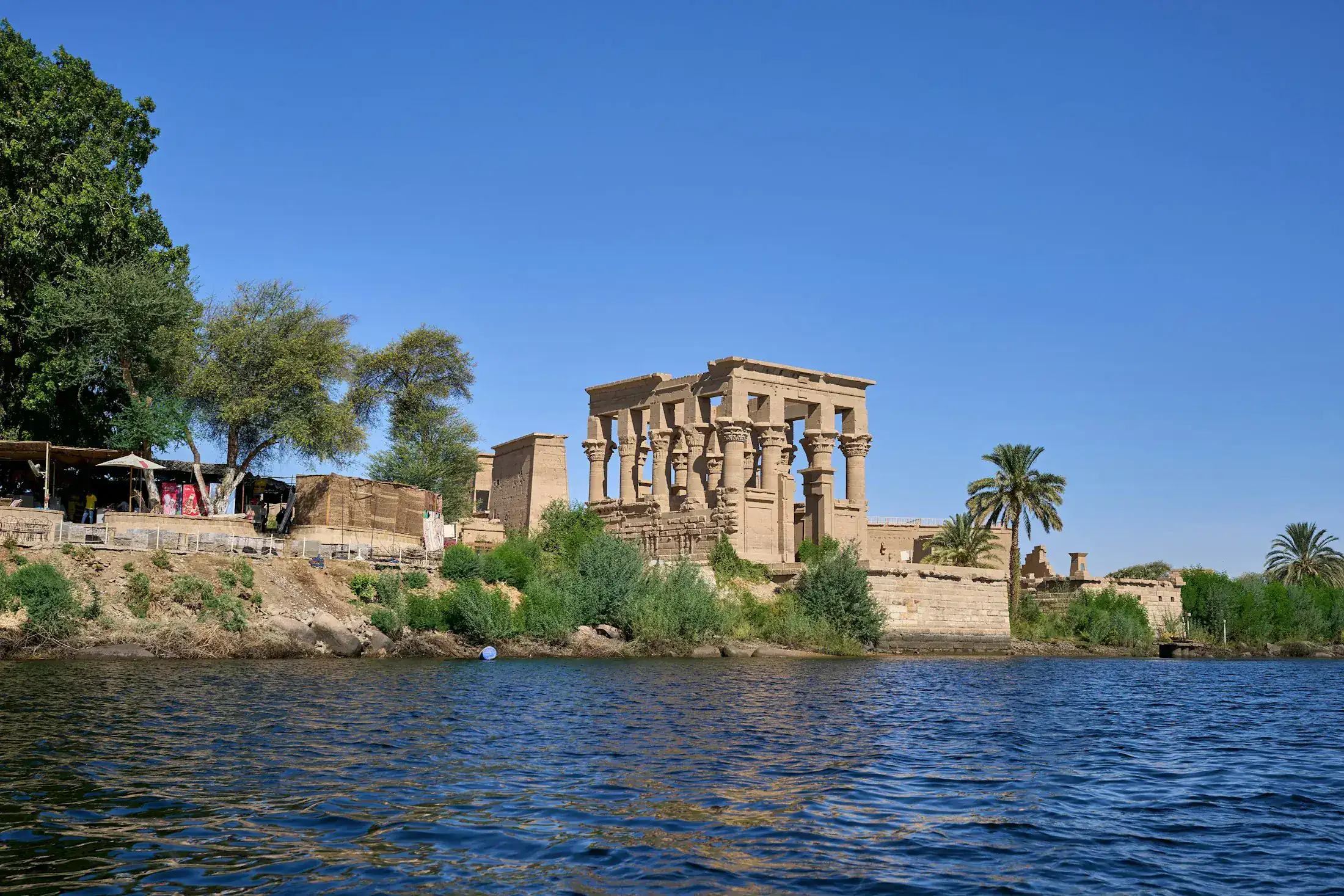
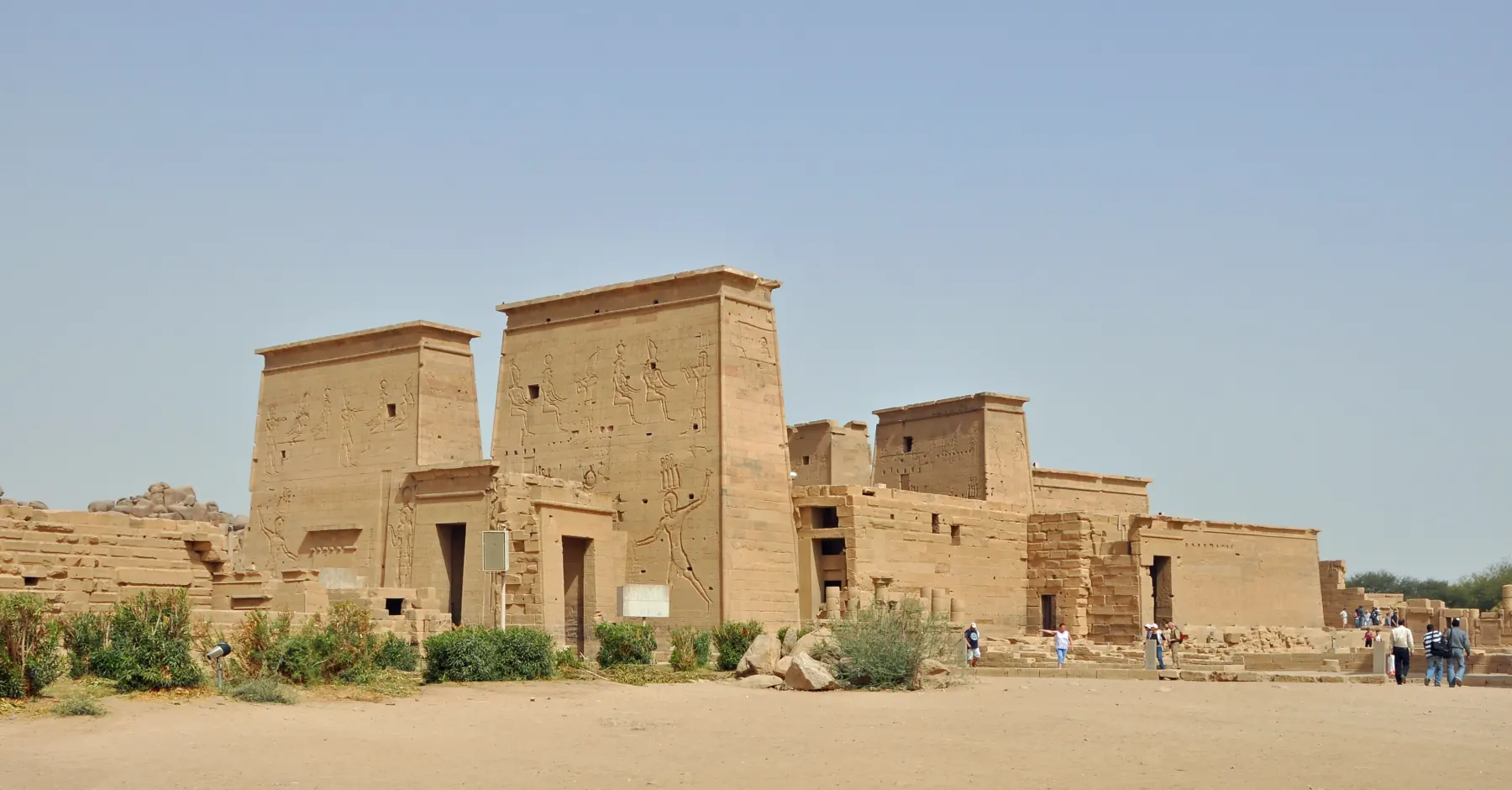
Philae looks as though it has always stood beside this stretch of water. Yet the temples seen today were dismantled and rebuilt on Agilkia Island. The Aswan High Dam threatened their former site, and an international campaign helped save them.
The main sanctuary was dedicated to Isis. From the water, its columns and walls come into view before you begin to grasp the scale of their relocation. Knowing this changes what you see: both an ancient place of worship and the work of the people who protected its stones. Philae is in the Aswan area; Abu Simbel, also rescued, lies much farther south.
Look from the water
Notice where the temples stand on Agilkia Island. This is their new location, chosen to preserve them.
The Nile around the islands
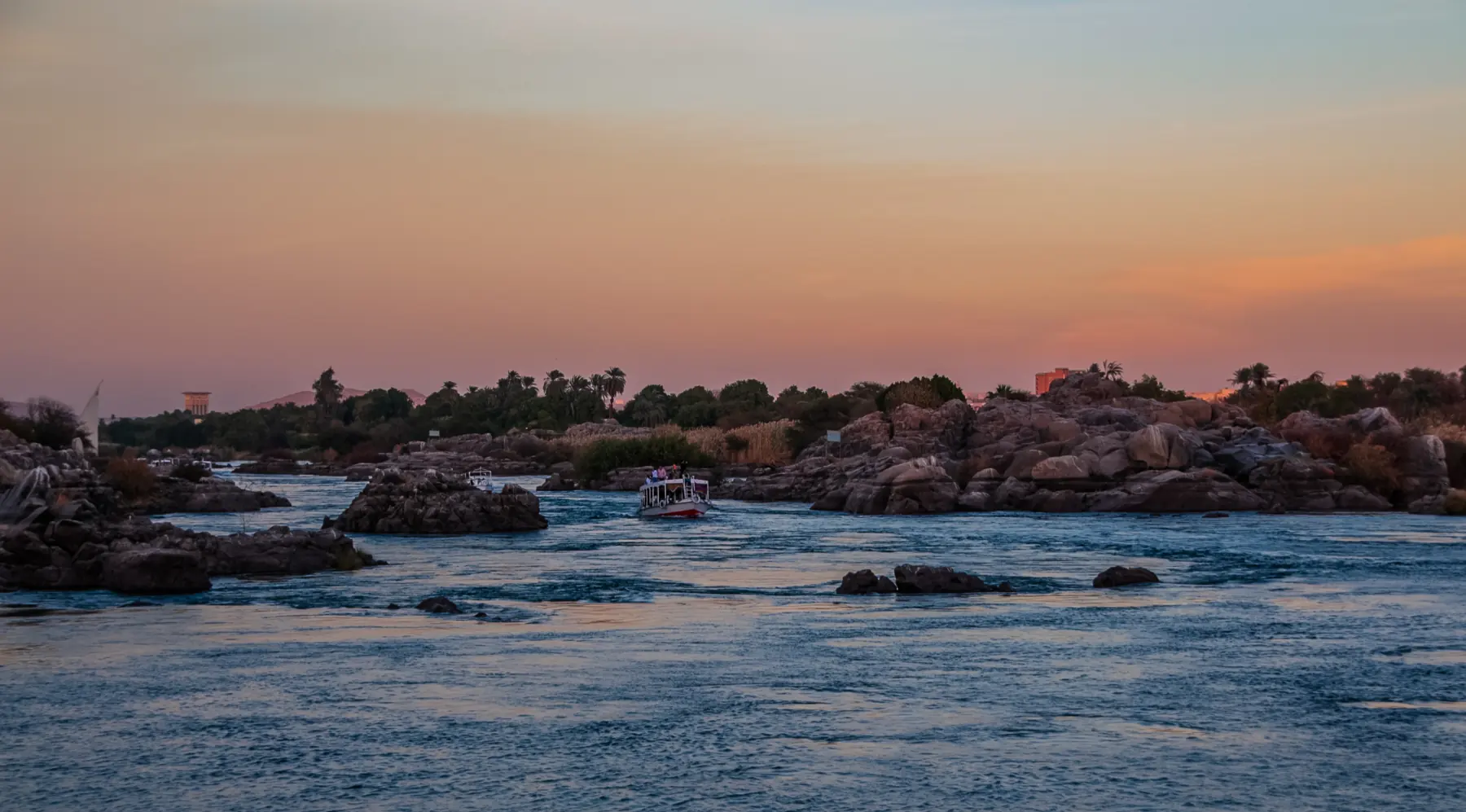
At Aswan, the river flows around islands and granite rocks near the first cataract. Give the landscape time alongside the monuments: a crossing offers another view of the city and its banks.
Philae near Aswan
The sanctuary of Isis at Philae belongs to the UNESCO-listed Nubian Monuments. Its buildings were saved from rising water and rebuilt on Agilkia Island. This is a visit from Aswan, separate from the journey farther south.
Abu Simbel needs more time
Abu Simbel is part of the same UNESCO property but lies much farther south. If you want to see it, allow a day for the journey and visit rather than adding it to a brief stop in Aswan. Check connections for your dates.
How many days in Aswan?
A full day can be given to Philae and the islands. Two days offer a gentler pace; Abu Simbel usually needs additional time. Adjust these suggestions around your route from Luxor.
Four scales for understanding
The river slows. The landscape opens.
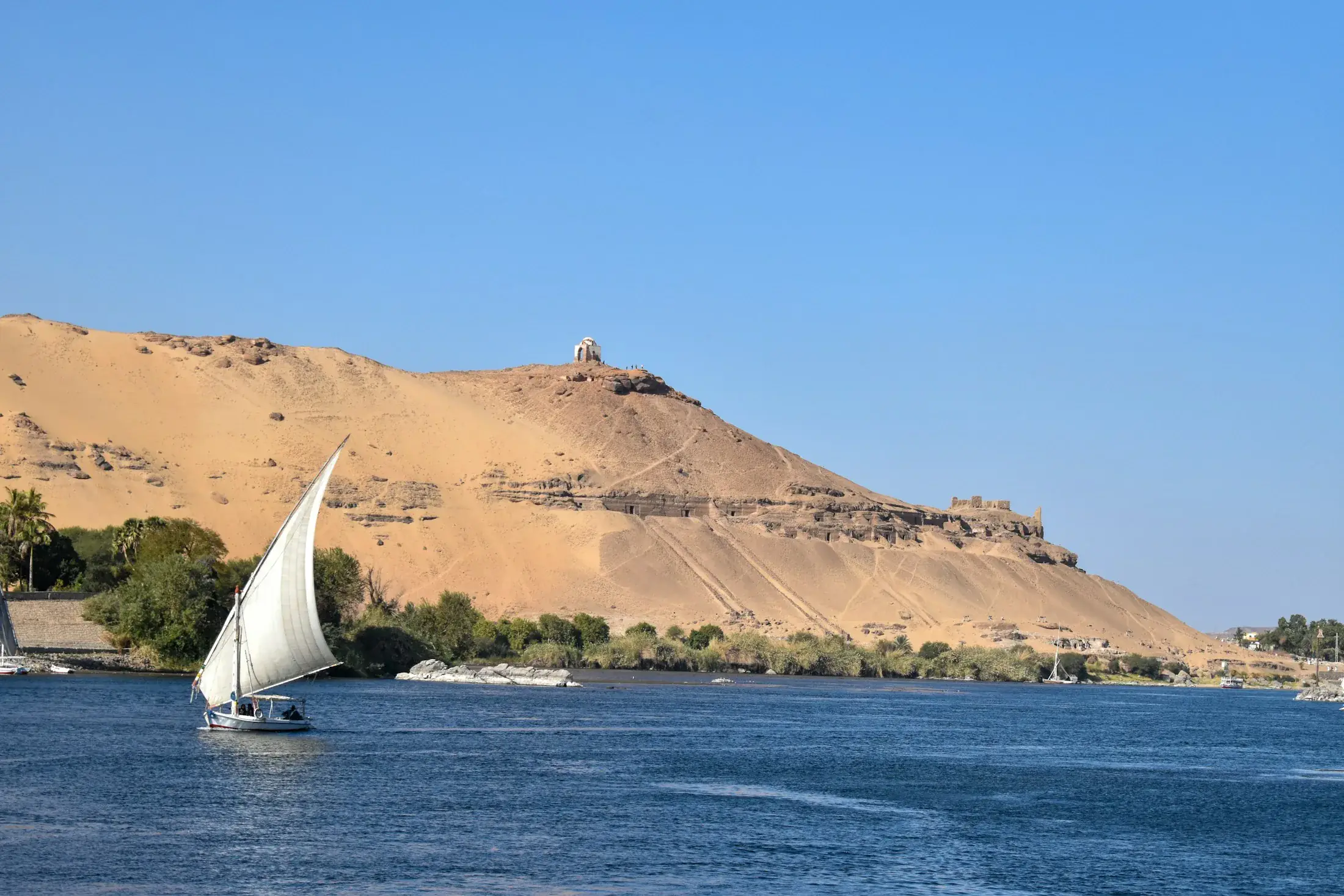
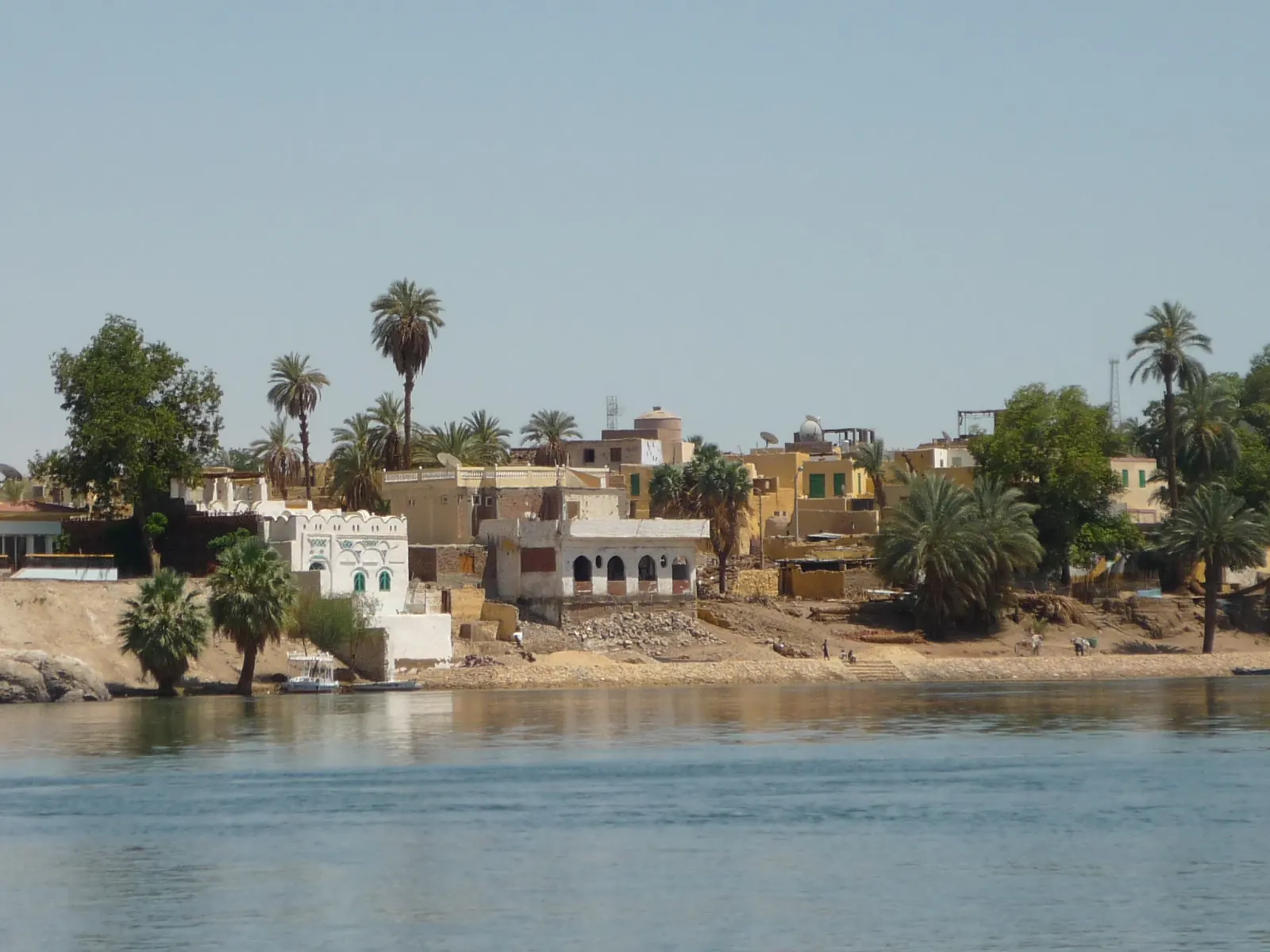
Islands, rocks, a village and a temple: four views of Aswan’s landscape.
Your trip to Egypt