
Destination
Luxor, from bank to bank
Picture your stay, then choose your pace.
Luxor, Egypt
At Karnak
Karnak’s 134 columns
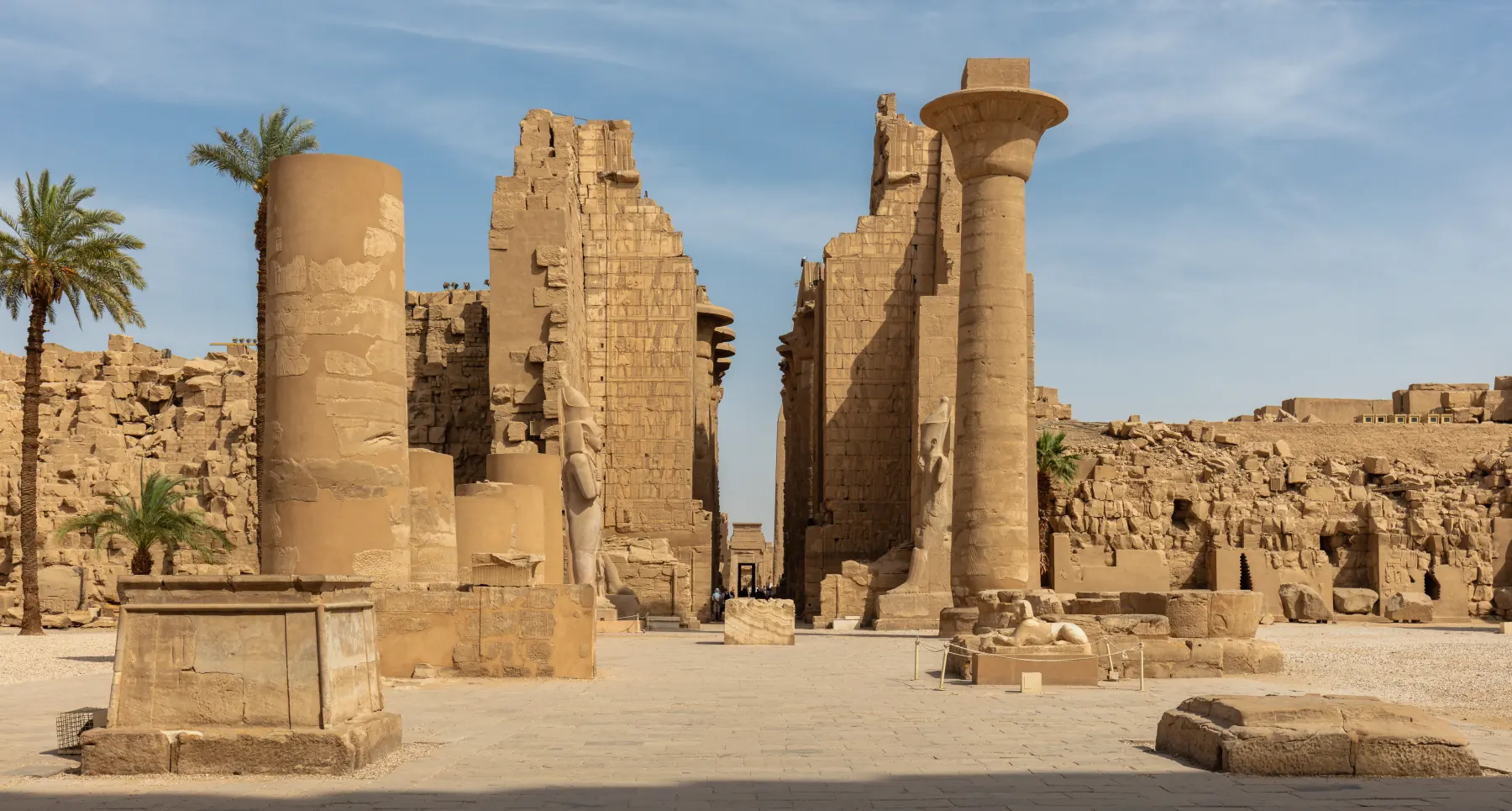
Karnak is a complex of temples built and enlarged over successive reigns. At the heart of the Great Temple of Amun, the Hypostyle Hall holds 134 columns. Twelve in the centre rise higher than the others. Standing among the stone shafts gives an immediate sense of the hall’s scale.
The reliefs on the walls and columns invite a closer look too. A sphinx-lined processional way linked Karnak with Luxor Temple. That connection helps make sense of the two sites on the east bank: they were part of the same ritual landscape, beyond the separate monuments visitors see today.
Look for this in the hall
Look up at the twelve central columns, then compare their height with the columns around them.
Understand the two banks
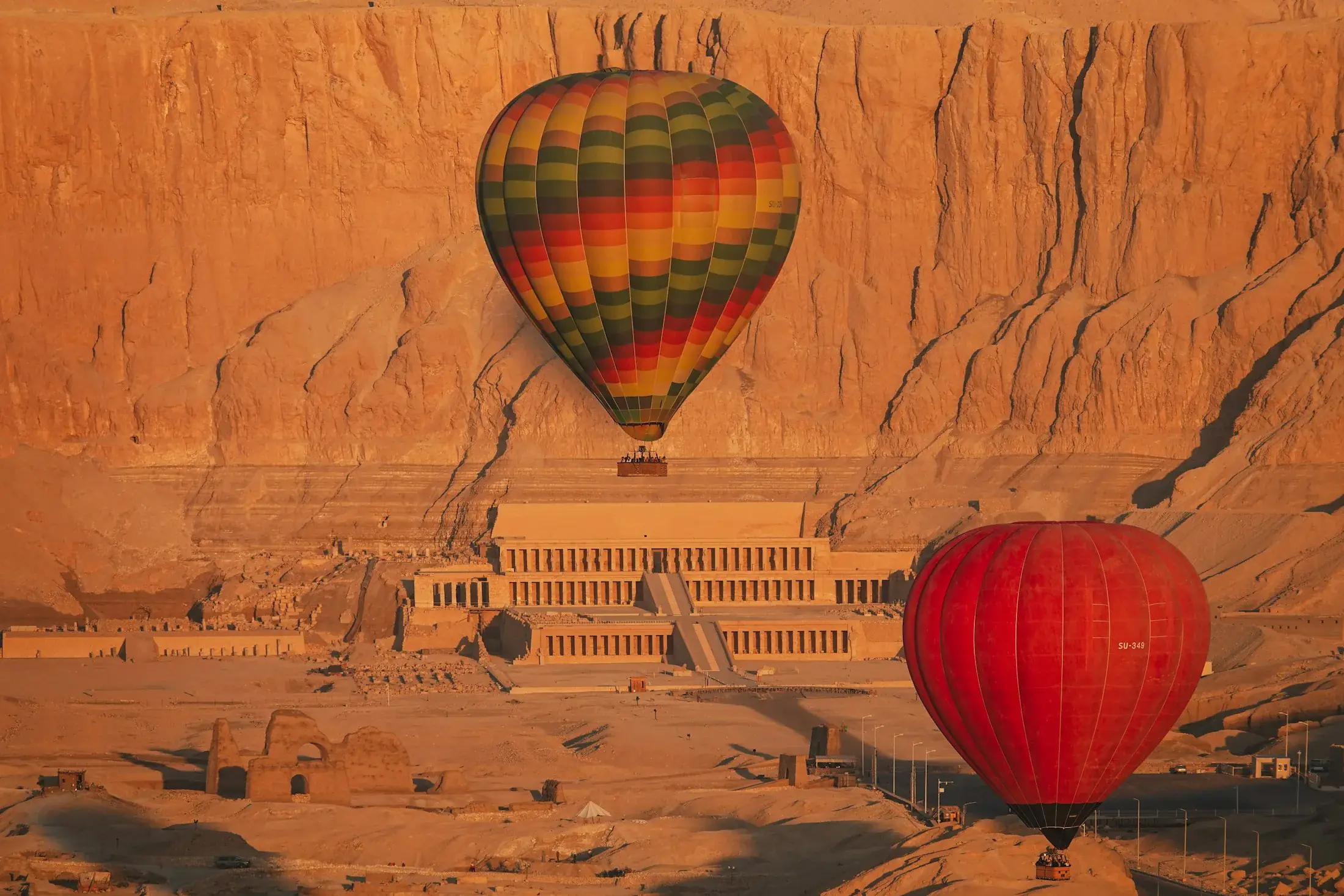
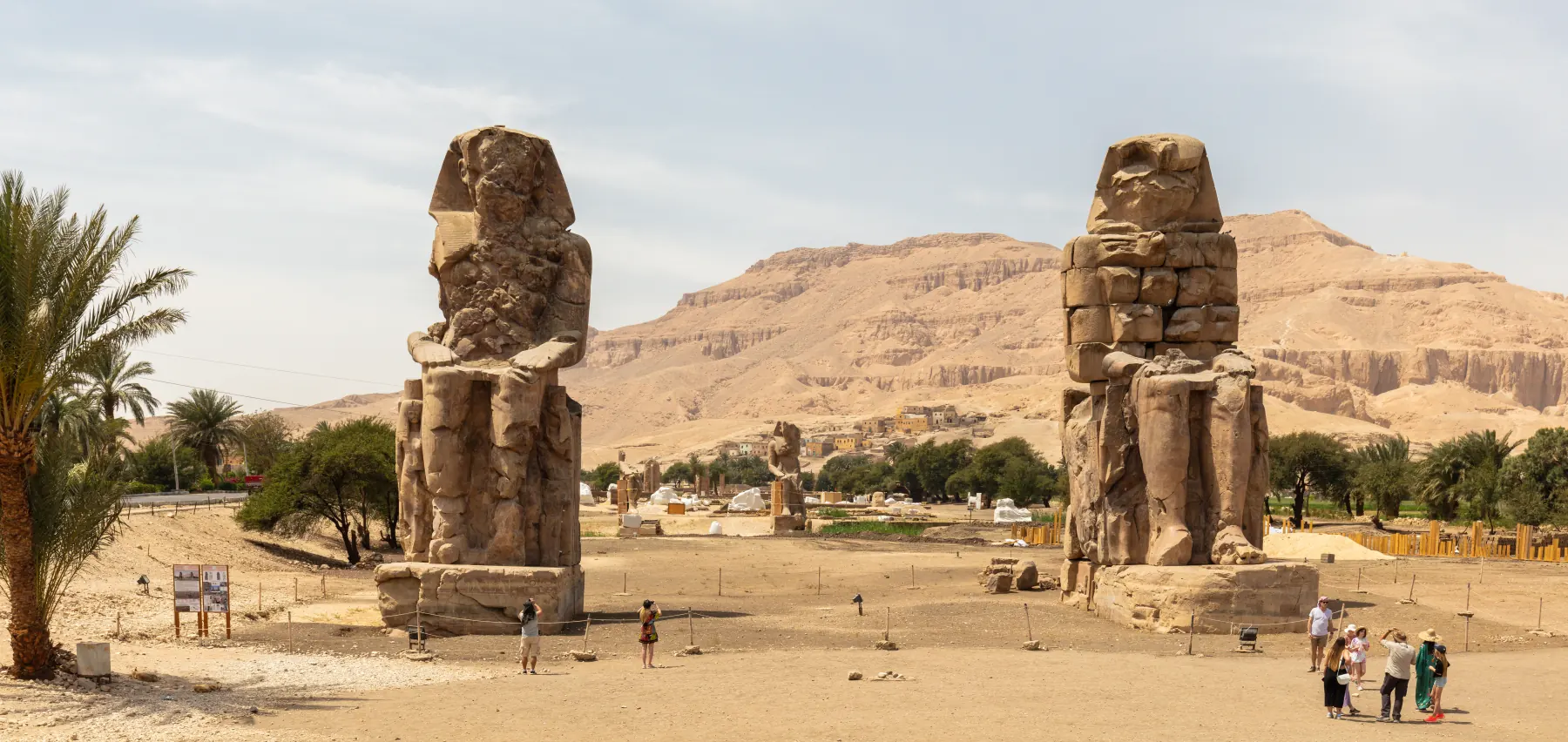
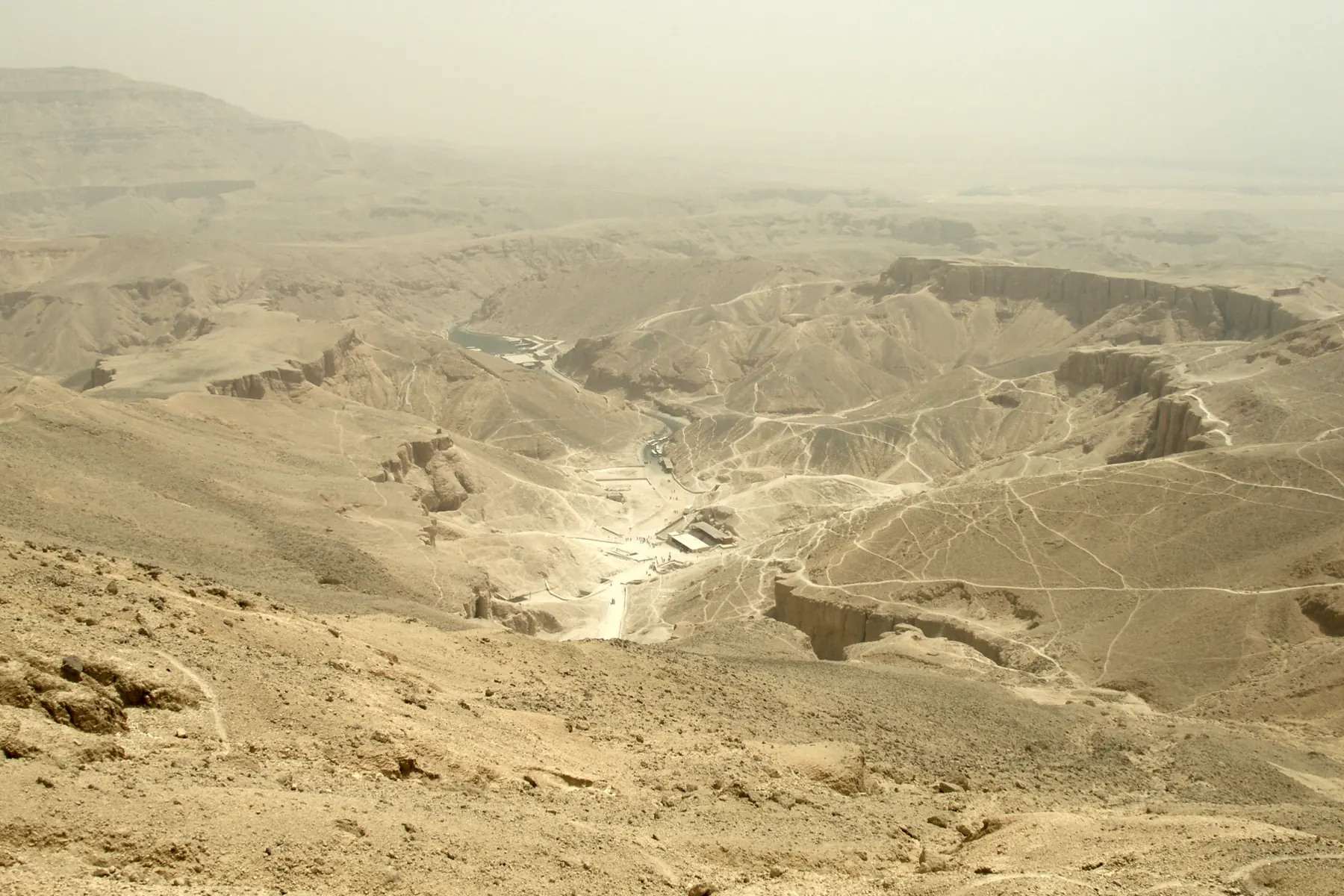
Karnak and Luxor Temple stand on the East Bank. Across the Nile, the Valley of the Kings and funerary temples sit beneath the Theban mountains. This geography helps you organise visits without moving between sites all day.
How long in Luxor?
One day means choosing a few sites. Two days let you give time to each bank; a third leaves room to return to a favourite place or travel at an easier pace. Adjust that pace around your journey and opening hours.
Look beyond Karnak’s scale
The Great Hypostyle Hall has 134 columns. Compare the twelve taller central columns with those around them, then look closely at the reliefs. On the West Bank, tombs tell a different part of ancient Egypt’s story.
Luxor and Aswan together
Luxor and Aswan make a natural Nile Valley pairing, but transport and any stops between them affect the time needed. If you also want Cairo or the Red Sea, allow room for journeys and warm days.
Five scales across two banks
The stone makes sense within the landscape.
The river, columns and Theban mountains give Luxor its distinctive views.


Your trip to Egypt